

Metal service centers have always operated in a complex environment, but today’s conditions are exposing the limits of legacy material handling practices. Volatile pricing, margin pressure, labor shortages, and customer expectations for shorter lead times are forcing operators to look beyond processing equipment and focus on internal logistics. Increasingly, the constraint is not what machines can cut or process, but how efficiently material moves through the facility.
For decades, sideloaders and floor-based storage formed the backbone of many service centers. They were effective in an era of lower throughput, simpler inventories, and readily available skilled operators. In modern facilities, however, these systems are increasingly outdated. While sideloaders are still capable of transporting material, they struggle to support the performance, flexibility, and visibility required in today’s operations.
Why sideloaders fall short in modern service centers
The primary limitation of sideloaders is that they are transport tools, not logistics systems. They move material from one place to another, but they do not actively manage storage, sequencing, or material flow.
1. Space and storage constraints
First, sideloaders demand space. Wide aisles are required for maneuvering long products safely, which dramatically reduces usable storage density. As inventories grow and buildings reach their limits, service centers are forced to expand outward instead of upward, often at significant cost. Floor-based storage also increases congestion as multiple vehicles compete for the same travel paths.
2. Dependency on operator knowledge
Second, sideloaders are highly dependent on operator knowledge. Experienced drivers know where material is stored, how to retrieve it safely, and how to stage it for downstream processes. That knowledge is rarely documented and difficult to replace. As labor availability tightens and turnover increases, this dependency becomes a serious operational risk.
3. Disruption of material flow
Third, sideloaders introduce variability into production flow. Material is often staged multiple times, parked in temporary locations, or delivered out of sequence. These delays rarely appear as major failures, but they accumulate as lost minutes, missed priorities, and excess work-in-process inventory. In many service centers, production bottlenecks are caused not by machine downtime, but by material arriving late or incorrectly staged.
4. Limited digital visibility
Finally, sideloaders offer limited digital integration. While they can be equipped with scanners or tablets, they remain fundamentally manual systems. Inventory accuracy, location tracking, and order visibility depend on consistent operator input. This makes real-time planning difficult and forces service centers to carry higher safety stock to offset that uncertainty.
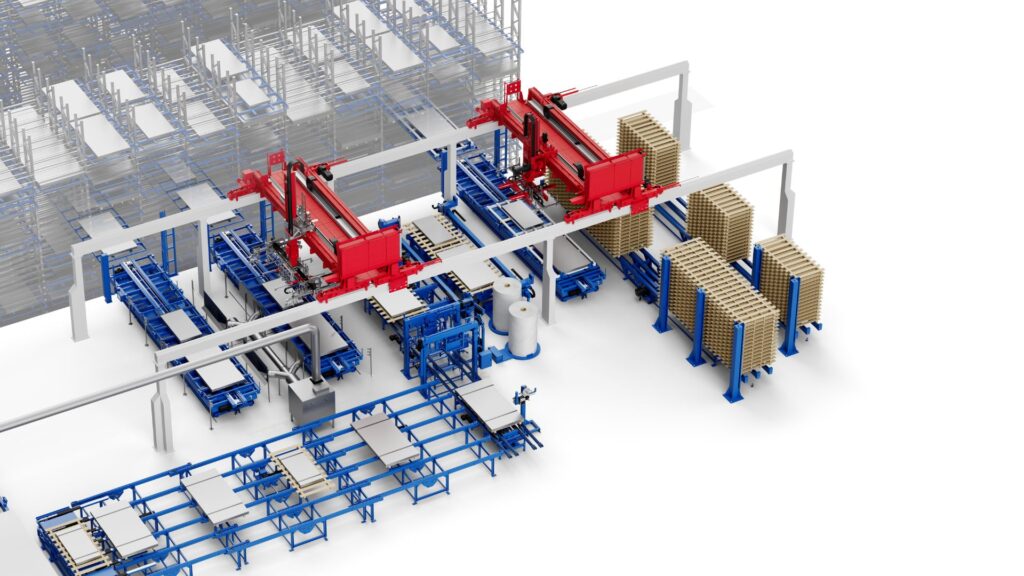
Fehr Sheet Handling System
How ASRS changes the operating model
Automated storage and retrieval systems address these challenges by treating storage as an active part of production rather than a passive holding area. Instead of relying on vehicles and operator memory, ASRS solutions create a structured, high-density environment where every piece of material has a defined location and a predictable path through the facility.
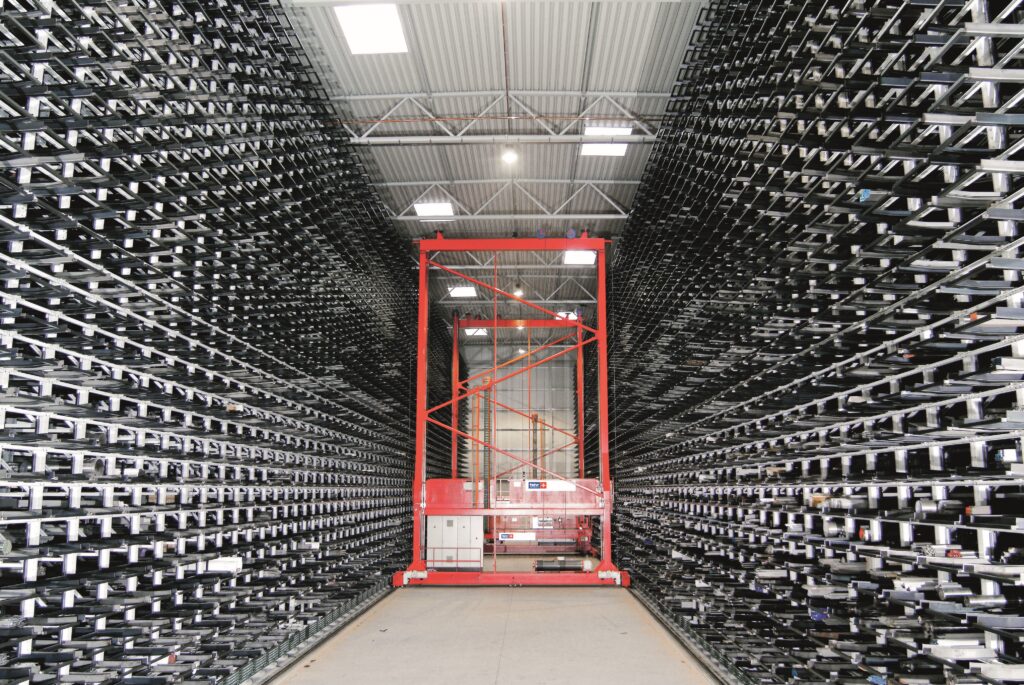
A leading example of this approach is the work of Fehr, which has focused specifically on the needs of metal service centers. Fehr’s Honeycomb ASRS system is designed to handle both long products and sheet metal within a single integrated storage and handling system. Rather than separating material types into different zones, the Honeycomb concept unifies them into one coordinated flow.
By storing long and flat products together in a high-density vertical structure, service centers eliminate duplicated handling and reduce internal transport distances. Material can be retrieved automatically and delivered directly to saws, lasers, or picking stations in the correct sequence. This removes much of the staging and rehandling that sideloader-based layouts require.
Space utilization improves immediately. Vertical storage uses the full height of the building, freeing valuable floor space and reducing congestion. At the same time, safety improves as forklift traffic and manual handling are significantly reduced.
Labor efficiency also increases. Instead of depending on skilled drivers to search for material, Fehr’s ASRS delivers material automatically, allowing operators to focus on supervising processes rather than driving equipment. Fewer people can handle higher volumes with greater consistency.
Process reliability improves through digital integration. The Honeycomb ASRS connects directly with ERP and production planning systems, ensuring that material arrives when and where it is needed. This synchronization reduces work-in-process inventory, shortens lead times, and improves on-time delivery performance.
Importantly, Fehr’s ASRS is designed as part of an end-to-end material flow. Sheet and long products can be buffered, sequenced, and fed into downstream equipment within the same system, allowing service centers to respond quickly to changing priorities without disrupting operations.
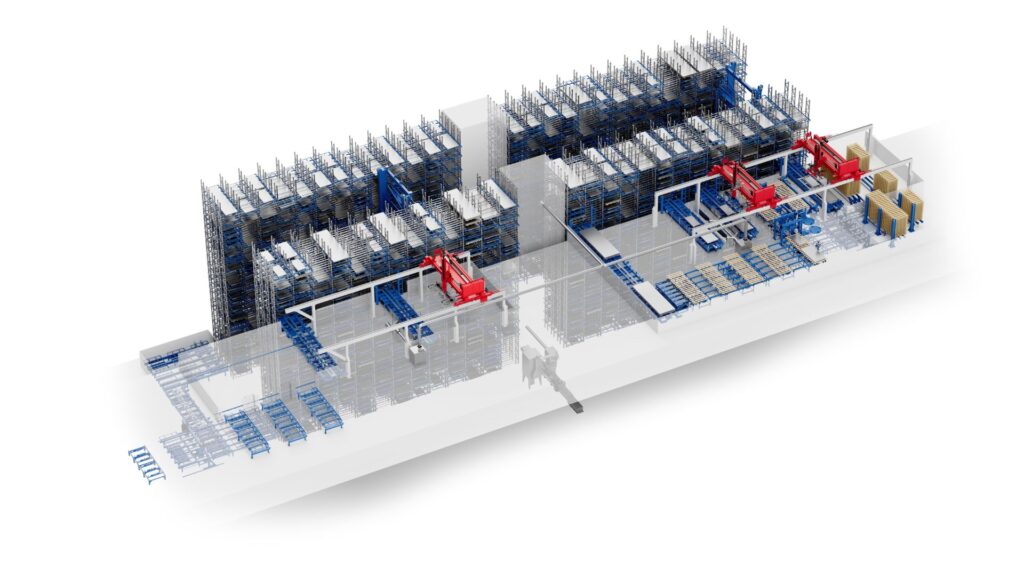
Fehr Honeycomb Sheet Metal Storage with Sheet Handling Station
A shift in how warehouses are viewed
The move away from sideloaders is not about replacing one piece of equipment with another. It reflects a broader shift in how service centers view their warehouses. In high-performing operations, storage, handling, and digital control are integrated into a single system that supports speed, accuracy, and scalability.
For service centers under pressure to do more with less, integrated ASRS solutions such as Fehr’s Honeycomb system are becoming essential. They transform the warehouse from a constraint into a strategic asset and provide a foundation for long-term competitiveness in an increasingly demanding market.